









 Your shopping cart is empty!
Thyroid diseases: causes of appearance, symptoms, diagnosis and treatment methods.
Definition
The thyroid gland (thyroid gland) is the internal secretion gland located on the front surface of the neck, consisting of two shares and an isthmus.
The thyroid gland secrees the iodized hormones T4 (thyroxin) and T3 (triiodothyronine), as well as the neo -dodged hormone calcitonin.
The main components necessary for the formation of thyroid hormones are iodine and tyrosine amino acid.
Iodine enters the body with food and water, is absorbed into the blood from the gastrointestinal tract. The daily need of the body in iodine is 110–150 μg/day.
The regulation of the synthesis and secretion of hormones of the thyroid gland is carried out through the hypothalamic-pituitary system. The hypothalamus secretions of Thyroliberin (TRG), which stimulates the isolation of the thyroid hormone (TSH) with the pituitary gland, which, in turn, regulates the growth and function of the thyroid gland. There is a feedback between the hypothalamus, the pituitary gland and the thyroid gland (an excess of iodine -containing hormones causes a decrease in the thyroidotropic function of the pituitary gland).
Hormones of the SHZH.JPGISITION is used according to the SHUTTERSTOCK license.
Thyroid hormones affect all types of metabolism: water-electrolyte, protein, fat, carbohydrate and energy. The presence of an adequate amount of hormones of the thyroid gland is a necessary condition for the normal functioning of the central nervous system.
The third thyroid hormone - calcitonin is involved in calcium metabolism, preventing it from leaching from bone tissue and thereby reducing its concentration in the blood.
Causes of thyroid diseases
Hormone synthesis disruption:
due to the lack or excess of iodine intake into the body;
due to congenital defects in the development of the thyroid gland;
due to surgical interventions on the thyroid gland;
due to the use of radioactive iodine;
due to autoimmune damage;
due to inflammatory damage.
Changing the functional state of the central nervous system.
The immunity of the body tissues to thyroid hormones.
The effect of drugs.
Iodine deficiency leads to a decrease in the concentration of thyroid hormones in the blood. As a result, the products of thyroidropic hormone are enhanced, which leads to a compensatory increase in the amount of thyroiditis (thyroid cells). Thus develop endemic and sporadic goiter.
Endemic goiter - an increase in the thyroid gland that occurs in people living in certain geographical areas with iodine deficiency in the environment. Sporadic goiter is detected in people living in non -endemic areas.
In addition to iodine deficiency in the formation of a non -toxic goiter, other factors can play an important role: autoimmune, genetic (changing the threshold of sensitivity to the lack of iodine in food; defects of enzyme systems involved in the synthesis of thyroid hormones), reduced content in the environment of microelements (cobalt, copper, zinc, molybdenum), admission from the food of digital agencies (thiocinas, thioxysolidons).
Viruses trophy to the cells of the thyroid gland can be the trigger mechanism for the development of hyperproduction of thyroid hormones.
Lymphocytes of the thyroid gland begin to produce antibodies to the receptors of cell membranes of their own cells. These antibodies have a stimulating effect on the thyroid gland. As a result of a violation of central regulation, the situation gets out of control, diffuse toxic goiter develops. There are also data on a hereditary predisposition to diffuse toxic goiter.
The goiter of the puppy.jpgizing is used according to the Shutterstock license.
The reasons for a decrease in the level of hormones of the puppy in the blood can be:
congenital aplasia (absence of an organ) or hypoplasia (underdevelopment of the organ) of the thyroid gland;
genetically determined violation of the synthesis of hormones in the gland;
disadvantage of iodine in food;
Excess iodine when the mother is taking iodine -containing drugs;
Reducing the mass of functioning thyroid tissue (autoimmune thyroiditis, surgery on the thyroid gland, purulent thyroiditis, pituitary diseases or hypothalamus).
As a result of a persistent decrease in the level of hormones of the puppy, hypothyroidism occurs with a complex clinical picture.
The causes of inflammation of the thyroid gland (thyroiditis) can be different. There is a connection between the development of the disease with bacterial, fungal, viral diseases of ENT organs or lung lesions mainly in people with weakened immunity.
The infection penetrates into the puppy with a blood flow, along the lymph paths, or as a result of direct hit with injury, wound, and medical manipulations. As a result, thyroiditis develops. In children, there is more often the connection of the disease with α- and β-hemolytic streptococci and a variety of anaerobic bacteria.
As a result of the use of certain drugs (interferons, interleukins, monoclonal antibodies, lithium preparations, iodine -containing radiocontracy substance, etc.), drug thyroids may occur.
The functional state of the central nervous system may be based on a violation of the thyroid gland function.
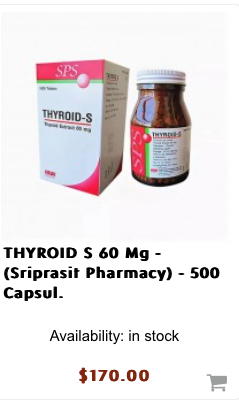
Buy Thyroid S 60 Mg - (Sriprasit Pharmacy) - 500 Tablets.